

How Modern Golf Shafts Improve Distance and Control
Modern performance starts long before the clubhead ever touches the ball. It begins in the engine of the swing—Golf shafts—where weight, materials, and bend profiles quietly dictate the shape and speed of every shot. Today’s designs aren’t built for trends; they’re built for measurable control, giving players more predictable trajectories without sacrificing the feel they trust under pressure.
The technology behind Golf shafts has evolved into a balance of engineering and nuance, merging stability with responsiveness in a way golfers can actually feel. Whether you load the shaft aggressively or prefer a smoother tempo, modern builds are tuned to preserve energy, tighten dispersion, and give players a repeatable window they can lean on throughout the bag.
Shaft Weight and Swing Speed
Weight influences everything from rhythm to contact quality, and it often sets the tone for a player’s entire delivery. Lighter builds encourage increased speed but can introduce timing issues if the golfer loses awareness of the clubhead. Heavier options add stability and help players who load aggressively maintain structure through the transition. The right weight complements natural motion, reducing excess effort and improving center-face contact. That balance is why modern Golf shafts have become more specialized, offering weight ranges that fit different tempos without forcing players into a one-size-fits-all category.
Weight also influences how the shaft stores and returns energy. Players who swing with a deliberate tempo may see higher efficiency from slightly heavier models, while those who rely on speed might perform better with a lighter profile that lets them accelerate freely. When weight is properly matched, dispersion tightens, ball speed stabilizes, and the swing path becomes easier to repeat. These improvements come from understanding how mass affects the player, not the other way around. With advances in design, today’s Golf shafts help eliminate guesswork by making weight a key, customizable performance variable.
Flex Profiles and Launch
Flex is one of the most misunderstood aspects of performance, yet it shapes how the shaft loads and releases throughout the downswing. A softer profile can help smooth-tempo players load the club effortlessly, while firmer profiles assist stronger transitions by preventing excessive face rotation. The combination of feel, timing, and stability determines a golfer’s launch condition, and dialing it in correctly creates a predictable, repeatable window. That’s where Golf Shafts become essential—giving players performance that matches their real, functional motion rather than generalized flex labels.
Launch is a product of how the shaft reacts under load. Too much flex and the ball balloons with excess spin; too little and shots come out flat with inconsistent carry. Modern engineering takes a zoned approach, adjusting firmness in the handle, midsection, or tip to give golfers precise control over height and spin. This fine-tuning ensures each swing produces reliable trajectories and consistent face angles at impact. When matched properly, Golf shafts optimize energy transfer and help players find a height profile that improves both distance and stopping power.
Steel vs. Graphite Designs
Steel remains the benchmark for feedback, consistency, and predictable weighting, offering a more traditional feel that ball-strikers value. Graphite, on the other hand, has advanced far beyond its early reputation, now providing increased speed, improved vibration control, and more specialized profiles. Each material brings its own performance DNA, and choosing between them comes down to the player’s priorities—feel, speed, stability, or load behavior. With evolving construction methods, today’s Golf shafts in both materials deliver more refined energy transfer and shot-to-shot repeatability than earlier generations ever could.
The gap between steel and graphite continues to narrow. Modern graphite can replicate the stout stability of tour-grade steel while offering weight advantages for players seeking more speed or reduced strain. Steel still excels in uniformity and predictable feedback, making it a top choice for precision iron play. Ultimately, the decision isn’t about superiority—it’s about matching material to the golfer’s goals. As manufacturing tolerances tighten, both steel and graphite Golf shafts now deliver high-level performance that caters to every segment of the game.
How Torque Shapes Flight
Torque measures how much a shaft resists twisting during the swing, particularly at impact. Low-torque designs reduce face rotation for players with stronger transitions, creating tighter dispersion and more predictable ball flights. Higher torque provides a smoother feel and can help players with moderate speeds square the face without forcing it. Modern construction techniques allow manufacturers to fine-tune torque independently from flex, giving players more control over ball direction and feel. This added precision is one reason why current Golf shafts deliver more reliable directional control across a broad range of swing types.
Torque also influences launch and spin tendencies. Lower torque often pairs with firmer tip sections to keep launch down and spin manageable, ideal for players who fight excessive curvature. Higher torque encourages a softer sensation during transition and can help those needing a bit more face closure or forgiveness. When matched properly, torque adjusts the balance between stability and smoothness, giving golfers the flight characteristics they expect. Advancements in composite layering now allow torque to be engineered without compromising durability, ensuring Golf shafts maintain structural integrity even under aggressive loads.
Understanding EI Curves
EI curves map stiffness throughout the shaft, revealing how different sections contribute to overall performance. Instead of relying on broad labels like “stiff” or “regular,” EI profiles show how the handle, midsection, and tip interact during motion. A golfer may prefer a firm tip with a softer midsection or the reverse depending on their transition and release patterns. EI data allows players to select a build that matches their natural sequencing. As engineering becomes more refined, Golf shafts now feature intentional stiffness zones that create distinct launch and feel signatures tailored to specific swing styles.
Understanding EI curves helps players interpret why two shafts with the same flex label can feel completely different. One may load early and release later, promoting a higher flight, while another may feel firmer throughout and keep the ball on a more penetrating trajectory. These differences become obvious only when examining how the stiffness values are distributed. Manufacturers now design EI curves with remarkable precision, offering golfers predictable responses that match their tempo and delivery. With clearer stiffness mapping, today’s Golf shafts give players more confidence in selecting a model that enhances both distance and control.
Matching Tempo to Shaft Feel
Tempo shapes how energy moves through the club, making it one of the most important elements in choosing a shaft that feels intuitive. Players with a smoother tempo typically load the shaft gradually, benefiting from profiles that offer fluid transitions without abrupt stiffness changes. Those with a sharper or more forceful move into the ball rely on added firmness to stabilize face angle and prevent the club from lagging behind. Matching the design to your natural motion is essential, because the right Golf shafts allow rhythm to stay uninterrupted while optimizing speed at the exact moment the club returns to impact.
When tempo is properly supported, everything tightens—strike quality, entry into the turf, and the repeatability of your ball flight. Profiles that complement your timing help the shaft deliver energy exactly when you expect it, creating a more connected feel from takeaway to finish. A mismatched profile leads to inconsistent contact and unpredictable windows, often causing players to manipulate the club without realizing it. By selecting a profile that mirrors your natural rhythm, modern Golf shafts make the entire swing more unified, consistent, and easier to repeat under pressure.
Modern Stability Improvements
Stability has become one of the defining advancements in current shaft engineering. Composite layering, refined heat treatments, and advanced mandrel designs now allow manufacturers to control deformation at every phase of the swing. This stability ensures that energy tracks more directly toward the ball instead of being lost through twisting or excessive bending. The benefit becomes clear in dispersion patterns—strikes stay tighter, curvature becomes more predictable, and golfers experience fewer surprises off the face. These refinements help modern Golf shafts deliver dependable results even under faster, more aggressive deliveries that would once have overpowered older designs.
Enhanced stability also improves how the club responds when contact drifts slightly from the center. Instead of punishing the player with dramatic gear-effect variations, today’s designs maintain structure through impact, helping deliver more playable outcomes. This breeds confidence, allowing players to swing freely without guarding against mishits. Engineers have pushed stability to new levels by integrating premium carbon fiber, strategically placed bias wraps, and improved resin systems, all working together to make Golf shafts more resistant to unwanted movement. The result is a shaft that stays locked-in from takeaway to follow-through, preserving intent even when execution isn’t perfect.
Choosing the Best Golf Shafts
Selecting the right model starts by understanding what performance traits matter most—launch height, spin profile, feel, and stability. Instead of relying solely on flex labels, players should consider how stiffness is distributed across the handle, midsection, and tip. Each region shapes a different aspect of the swing, and small differences can dramatically change ball flight. This is why the best approach considers tempo, attack angle, and preferred trajectory. With so many specialized designs available, today’s Golf shafts offer targeted solutions for players seeking either higher launch, lower spin, or a more neutral flight window that supports consistent distance gapping.
Durability, weight options, and material choices also play a significant role when evaluating what to put in the bag. Some players benefit from feather-light builds that promote effortless acceleration, while others require heavier models to enhance sequencing and maintain stability through impact. There is no universal “best”—only the best match for each golfer’s unique delivery. When the selection aligns with natural mechanics, Golf shafts amplify strengths rather than mask weaknesses, offering a blend of performance, control, and confidence that becomes immediately noticeable on the course.
Tip Stiffness and Distance
Tip stiffness shapes how the clubhead behaves at the moment of impact, affecting both launch and spin. A firmer tip section typically keeps the ball lower with reduced spin, making it ideal for players with higher speed or those fighting excessive height. A softer tip encourages easier elevation, helping players maintain carry distance without altering their swing. This relationship allows golfers to fine-tune height and roll-out characteristics through shaft design rather than swing compensation. By incorporating precise material arrangements, engineers ensure modern Golf shafts produce repeatable trajectories suited to each player’s needs.
Tip stiffness also influences how energy is delivered into the ball. Firmer designs prevent the head from lagging behind, tightening start lines and improving directional control. Softer tips add a smoother sensation during transition, supporting players who need additional assistance squaring the face. These variations play a defining role in distance consistency, especially in long irons and metalwoods where small changes matter. When matched correctly, Golf shafts use tip stiffness to create predictable, stable patterns that help players maximize both carry and total yardage without sacrificing accuracy.
Butt Section Feel
The butt section controls how the shaft feels in the hands, influencing comfort, timing, and overall confidence during the takeaway and transition. A firmer handle stabilizes the upper portion of the shaft, enhancing responsiveness for players who deliver the club with force. Softer butt sections create a smoother sensation, allowing golfers with more gradual tempos to feel the load without abrupt stiffness. Because the hands are the swing’s anchor point, the way the butt section responds has a major effect on how naturally a golfer moves the club. This is why modern Golf shafts emphasize refined handle design to support different swing patterns.
Handle stiffness also affects how the shaft transitions energy into the midsection. If the butt is too soft for a player’s strength, timing becomes inconsistent as the club feels disconnected from the body. If it’s too firm, players may struggle to sense load or release, causing tension that limits speed. Manufacturers now craft butt sections with precise layering to
Why Length Matters
Length influences how the club delivers energy and how consistently the player returns the face to the ball. A longer build may increase speed, but only if the golfer maintains balance and center-face contact under that extended arc. Shorter builds prioritize control and repeatability, often helping players square the face more reliably. These trade-offs show why shaft length plays a bigger role in performance than most realize. When matched correctly, it helps Golf shafts deliver predictable launch conditions without forcing compensations in tempo or posture. This is where Golf Shafts become essential for dialing in performance.
Length also impacts the club’s effective stiffness and how the shaft loads throughout the swing. A build that’s too long can make the profile feel softer than intended, creating timing issues or excess curvature. Too short, and the shaft may feel overly firm, reducing launch and dynamic loft. Modern fitting trends show that small length adjustments can dramatically tighten dispersion patterns. When optimized, Golf shafts provide a blend of speed, control, and comfort that supports each player’s natural sequencing without forcing unnatural adjustments.
Manufacturing Consistency
Consistency separates premium craftsmanship from mass production. Modern manufacturing uses tighter tolerances, refined materials, and precise layering to ensure every shaft behaves exactly as intended. This level of accuracy gives players confidence that identical models will produce identical results, something earlier generations struggled to guarantee. With refined quality control, Golf shafts offer more predictability, giving golfers a reliable foundation for building performance across the entire bag.
These advancements matter because even slight deviations in stiffness or balance point can alter feel, flight, or timing. Premium shafts undergo multiple inspections—weight sorting, frequency matching, and structural verification—to ensure their behavior lines up with their design intent. The result is a more uniform experience from club to club. This level of consistency makes modern Golf shafts a far more trustworthy component for players seeking stability and repeatable performance under pressure.
Tour Trends That Matter
Tour adoption drives innovation, and many of today’s most effective designs started as prototypes in the hands of elite players. Professionals gravitate toward profiles that improve dispersion, control trajectory, and optimize how energy transfers through the swing. Their preferences influence which technologies filter down to everyday golfers. This feedback loop explains why modern Golf shafts offer more specialization, giving amateurs access to the same stability and precision that shape performance on Tour.
Trends such as firmer midsections, reinforced tips, and improved balance points reflect what top players demand from their equipment. These preferences aren’t about chasing speed—they’re about tightening windows, controlling misses, and creating dependable ball flights across varying conditions. As more Tour data becomes available, manufacturers refine profiles to help golfers of all swing speeds benefit from the same principles. This evolution in design shows how Golf shafts continue to adapt based on real-world performance feedback from the game’s best players.
Balance Point Adjustments
The balance point affects how the club feels throughout the swing and how the golfer senses the head’s position. High-balance-point shafts shift mass toward the handle, creating a lighter-feeling head and promoting higher speeds. Lower balance points increase head awareness, helping players control the face more effectively. Adjusting this parameter alters how Golf shafts support different tempos, shot shapes, and delivery patterns without drastically changing weight or flex labels.
When properly tuned, balance point adjustments improve sequencing by helping the golfer track the club’s orientation naturally. Faster swingers may benefit from handle-biased designs that prevent the club from feeling too heavy at the top, while smoother-tempo players often prefer more traditional balance for better face control. These refinements allow manufacturers to create shafts that feel custom-built without requiring extreme changes in stiffness. Such precision helps modern Golf shafts deliver more consistent performance swing after swing.
Heavier Options for Control
Heavier builds help stabilize aggressive transitions and reduce unwanted clubface movement during the downswing. Players who generate a lot of speed or rely on a firm transition often find heavier options improve timing and directional control. The added mass increases resistance to twisting while preserving the structure of the swing arc. These advantages help explain why certain golfers achieve more consistency when they choose heavier Golf shafts instead of lighter alternatives that may feel too quick or unstable.
Control doesn’t just come from stiffness; it comes from how mass interacts with the golfer’s natural mechanics. Heavier shafts promote smoother rhythm, making it easier to keep the club on plane while maintaining center-face contact. This leads to more predictable launch conditions and better management of curvature. Modern designs fine-tune weight without sacrificing feel, ensuring heavier profiles don’t become overly rigid. When matched correctly, these Golf shafts give stronger players a level of command that enhances confidence on every swing.
Insights From Fitting Data
Modern fitting data shows how golfers load the club differently, even when their swing speeds appear identical. Some players generate power through early acceleration, while others store energy until late in the downswing. These behavioral patterns create distinct needs for stability, bend profile, and weight distribution. When analyzed properly, fitting data reveals why two golfers with similar swings require different profiles. This is where Golf shafts begin to separate themselves, offering tailored responses matched to each unique delivery pattern.
Launch monitors now show how small adjustments in shaft design influence ball speed, spin, and shot shape. A player who struggles with timing may gain consistency from a smoother-loading model, while someone with a more forceful transition might benefit from added stiffness in key zones. These insights help eliminate guesswork by translating real swing behavior into equipment choices. As a result, modern Golf shafts give players the ability to build a setup based on evidence, not feel alone—leading to more predictable results across the entire bag.
Spin Management Factors
Spin plays a pivotal role in distance and stopping power, and the shaft heavily influences how much spin a golfer produces. A firmer tip helps reduce excess spin for high-speed players, while a more responsive midsection can help moderate swingers generate enough lift to maintain carry. Matching spin profile to swing dynamics becomes essential for consistency, especially in windy conditions or on firm greens. This is why modern Golf shafts prioritize stability where it matters most, supporting a cleaner, more controlled spin window.
Spin isn’t only about numbers—it’s about trajectory management. Too little spin produces bullets that don’t hold greens; too much creates ballooning shots that lose energy and fall short. The shaft’s ability to regulate loft, face angle, and energy return determines how consistently a golfer finds the ideal window. By fine-tuning stiffness patterns throughout the profile, manufacturers create predictable launch and spin characteristics tailored to different swing types. The result is a new generation of Golf shafts engineered specifically to keep flight under control without sacrificing distance.
Aftermarket vs. Stock
Stock shafts are built to fit the broadest possible audience, which means compromises in weight, consistency, and profile design. Aftermarket models eliminate these compromises by offering specialized builds with tighter tolerances and refined materials. These enhancements give players more consistent results and a feel that aligns with their natural mechanics. This level of precision is why modern Golf shafts outperform mass-produced options and provide a measurable improvement in both distance and directional stability. For golfers seeking premium performance, Golf Shafts from aftermarket lines offer a clear and immediate upgrade.
The biggest difference comes down to quality control and engineering intent. Stock shafts favor cost-efficiency and predictable mass production, while aftermarket models are designed around performance metrics validated by Tour testing and advanced fitting data. These designs provide more stable profiles, cleaner impact dynamics, and more reliable launch windows across varying swing speeds. When players switch to premium components, they often notice improved shot shape control and tighter dispersion almost instantly. Today’s Golf shafts are built to deliver that advantage, elevating a golfer’s entire setup beyond what off-the-rack builds can realistically achieve.
Recent Posts
-
Graphite Design Does it Again !!
The winner of the New Zealand Open was playing a Graphite Design Tour AD IZ-7 X-Stiff flex wood shaf …Mar 3rd 2026 -
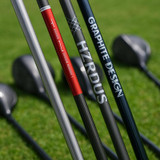
How Modern Golf Shafts Improve Distance and Control
Modern performance starts long before the clubhead ever touches the ball. It begins in the engine …Nov 26th 2025 -
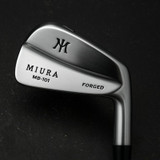
How Miura Golf Redefined Modern Blade Design
Precision isn’t born in automation. It’s forged by hand, stroke by stroke, in workshops where ste …Oct 15th 2025